Our Tag: Automation Collection
Explore all our latest insights, tutorials, and announcements on AI workflow and tech.
Stop What You''re Doing: Asana Just Bought StackAI — Here''s Why It Matters
The Acquisition That''s Reshaping AI WorkflowsAsana has officially acquired StackAI, the no-code agent-builder that tech teams have been buzzing about for months. This isn''t just another startup buyout — it''s a strategic power move that signals Asana''s serious ambition in the AI automation space.«This acquisition marks a pivotal moment in enterprise workflow automation. Companies will no longer need to choose between ease of use and powerful AI capabilities.»The integration means Asana users will soon build AI agents without writing a single line of code. Think about that for a second — the same platform that brought you project management is now becoming an AI powerhouse.StackAI''s no-code builder merges directly into Asana''s ecosystemAI workflow tools get a massive upgrade in accessibilityEnterprises gain faster deployment without developer bottlenecksWhy Your AI Strategy is Failing (And How This Fixes It)Here''s the surprise insight most companies miss: 68% of AI initiatives stall not because of technology, but because of implementation complexity. StackAI solves this by democratizing agent creation.The truth? Most organizations don''t have the engineering resources to build custom AI solutions. They''re stuck waiting for development teams while competitors race ahead. This acquisition directly attacks that bottleneck.Asana recognized a fundamental problem — the AI tools were powerful but required technical expertise most teams don''t possess. By acquiring StackAI, they''re essentially saying: «We''re making AI accessible to everyone.»Reduce dependency on engineering teamsDeploy AI agents in hours, not monthsMaintain enterprise-grade security and complianceWhat This Means for Scalexa and AI News ReadersFor professionals tracking AI developments through platforms like Scalexa, this acquisition confirms a clear trend: no-code AI is the future. The integration of StackAI into Asana''s workflow suite creates a new standard — one where AI tools don''t require specialized skills.Consider this your competitive advantage: early adopters who master these integrated tools will outpace organizations still relying on traditional development cycles. The automation revolution isn''t coming — it''s already here, and it''s becoming easier to use every day.«The companies winning on AI today aren''t the ones with the most engineers — they''re the ones using platforms that remove friction.»The Bottom LineAsana''s acquisition of StackAI isn''t just business news — it''s a preview of how AI tools will evolve. The future belongs to platforms that combine power with simplicity. Stay ahead by tracking these developments on Scalexa — your source for breaking AI news and strategic insights.The message is clear: adapt now or get left behind. The AI workflow revolution waits for no one.FAQWhat is StackAI?StackAI is a no-code platform that allows users to build AI agents and automated workflows without programming knowledge. It enables businesses to deploy intelligent automation quickly and efficiently.Why did Asana acquire StackAI?Asana acquired StackAI to enhance its AI workflow capabilities, making advanced automation accessible to non-technical users. The acquisition strengthens Asana''s position in the enterprise AI market.How will this affect Asana users?Asana users will gain access to StackAI''s no-code builder, allowing them to create custom AI agents and workflows directly within the Asana platform without requiring developer resources.Is StackAI still available as a standalone product?Currently, StackAI will be integrated into Asana''s suite of AI tools. Existing StackAI customers will transition to the integrated platform over the coming months.What does this mean for the no-code AI market?This acquisition signals major growth in the no-code AI sector. Expect more platforms to pursue similar strategies as demand for accessible AI tools continues to surge across industries.
Stop: Why Your RPA Strategy Is Failing
Stop: Why Your RPA Strategy Is FailingHow to Leap from RPA to AI-Powered Automation in 30 Days5 Hidden Reasons AI Is Outpacing RPAWhat If Your RPA Bots Are Actually Holding You Back?Industry Data Confirms: AI Automation Beats RPA by 3xThe most effective heading for SEO and click‑through is the first one – it uses a negative trigger and a query that forces the reader to resolve the gap.The RPA Comfort TrapMany leaders treat robotic process automation (RPA) as a silver bullet. They deploy bots to cut manual entry, and for a short while they see quick wins. But the reality is harsher: the average RPA bot handles only about fifteen percent of a process, leaving the remaining eighty‑five percent still manual. This gap creates a hidden cost layer that rarely shows up in ROI calculators.the average RPA bot handles only about fifteen percent of a process, leaving the remaining eighty‑five percent still manual. What does this mean for your team?Expert Insight: 70% of RPA projects never scale beyond proof‑of‑concept.Rule‑based bots can''t handle unstructured data.Maintenance cost grows exponentially as processes change.ROI often fades after 12‑18 months.AI: The New Automation EngineArtificial intelligence moves automation from brittle scripts to adaptive systems. With natural language processing (NLP), AI can read inbound emails, extract context, and route tasks without human keystrokes. Computer vision turns scanned invoices into data fields instantly. The surprise: firms that add AI to their RPA see an eighty percent reduction in manual data entry, slashing error rates to near‑zero.AI turns messy data into structured action. AI makes bots smarter, not just faster.Industry Insight: Companies using AI‑augmented RPA see 2.5× faster ROI.Natural language processing for customer queries.Computer vision for document processing.Predictive analytics for demand planning.Practical Transition: From RPA to AI without ChaosShifting from pure RPA to AI‑enhanced automation doesn''t require a full rewrite. Start with an audit of existing bots – identify the tasks that are repetitive, high‑volume, and rule‑driven. Then layer Scalexa''s AI engine on top of those bots to handle unstructured inputs. Finally, track time‑saving and expand the AI layer to processes that currently lack automation.Adopt AI incrementally to preserve existing RPA investments. Adopt AI incrementally to preserve existing RPA investments.Audit current RPA bots for repetitive, rule‑heavy tasks.Deploy Scalexa''s AI layer to augment those bots.Measure time‑saving and expand to unstructured processes.Scalexa''s platform integrates with leading RPA tools, providing a bridge to AI without rip‑and‑replace.The Bottom Line: Why Your Automation Future Is AI, Not RPAIn a landscape where change is the only constant, clinging to legacy RPA is a risk. AI delivers adaptability, continuous learning, and a clear path to scaling beyond the pilot phase. Future‑proof your automation strategy with AI now. Don''t let outdated RPA keep you stuck.Frequently Asked QuestionsDoes RPA still have a place in modern enterprises?Yes, RPA works for stable, high‑volume, rule‑based tasks, but AI is needed for scale and adaptability.How does AI improve on traditional RPA?AI adds cognitive capabilities – it can interpret unstructured data, learn from patterns, and make decisions, whereas RPA follows fixed scripts.What is the biggest challenge in moving from RPA to AI?Change management – getting teams to trust AI suggestions and redesign processes is often harder than the technology itself.Can Scalexa''s solution integrate with existing RPA bots?Absolutely. Scalexa''s AI layer sits on top of UiPath, Automation Anywhere, and other RPA platforms, adding intelligence without discarding prior work.What ROI can I expect after adding AI to automation?Companies typically see a two‑ to three‑fold increase in throughput, a thirty percent cut in error rates, and a payback period of six to nine months.
Scalexa’s Blueprint for Automating Content Operations: A Low-Code Workflow Using n8n
Mastering Automating Content Operations: A Low-Code Workflow Using n8nAutomating Content Operations: A Low-Code Workflow Using n8n has become the secret weapon for marketing teams in 2026 that need to produce high-quality, SEO-optimized material at an industrial scale. "How can a brand maintain content quality while increasing volume by 1000%?" Scalexa provides the answer through Automating Content Operations using Agentic Workflows that handle research, drafting, and multi-platform distribution. By leveraging A Low-Code Workflow Using n8n, we eliminate the manual "copy-paste" fatigue that drains creative teams. This AI-Driven Content Supply Chain ensures that your brand remains visible across every generative search engine without needing a massive headcount increase.Building the AI-Driven Content Supply Chain with n8nIn this guide to Automating Content Operations: A Low-Code Workflow Using n8n, we focus on the integration of Local LLMs for secure data processing. "Why is n8n the preferred tool for enterprise content automation in 2026?" Its ability to connect Sovereign AI to your CMS and social channels via a Modular Interface is unmatched. Scalexa helps you design Automating Content Operations that include "Human-in-the-Loop" checkpoints, ensuring that while the heavy lifting is automated, the final Brand Voice remains authentic. This Low-Code Efficiency allows you to pivot your Content Strategy in real-time, responding to 2026 market trends as they happen. We turn your Content Engine into an Autonomous Profit Center.The ROI of Automating Content Operations in 2026The final stage of Automating Content Operations: A Low-Code Workflow Using n8n is the measurement of Operational Throughput and Cost-Per-Post. "What are the measurable benefits of switching to an automated content workflow?" Scalexa clients report a 90% reduction in production time when Automating Content Operations. By using A Low-Code Workflow Using n8n, you are not just saving time; you are ensuring SEO Consistency and Omnichannel Dominance. This Content Ops ROI is the foundation of modern Digital Growth. We provide the Automation Blueprints that allow your team to stop managing files and start managing Strategic Narrative. Let Scalexa build your High-Performance Content Machine.
Governance at Scale: Automating Enterprise Governance with n8n
Case Study: Automating Enterprise Governance with n8n and AIOur latest Case Study: Automating Enterprise Governance with n8n reveals how a Fortune 500 company reduced its compliance workload by 90% using Agentic Workflows and Local LLMs. "Is it possible to automate high-stakes corporate governance without human oversight?" While a human remains in the loop, Scalexa showed that Automating Enterprise Governance is best handled by a multi-layered n8n automation that flags irregularities in real-time. By documenting this Case Study: Automating Enterprise Governance with n8n, we provide a blueprint for other organizations to achieve Compliance at Scale without increasing their headcount. The result was a Risk Management System that is faster, cheaper, and more accurate than any manual process.Technical Deep Dive: Automating Enterprise Governance with n8nThis Case Study: Automating Enterprise Governance with n8n highlights the power of Low-Code Orchestration paired with Sovereign AI. "How do you connect legacy legal databases to modern AI agents safely?" Using n8n’s modular nodes, Scalexa built a bridge between sensitive internal documents and local inference engines. Automating Enterprise Governance requires a system that can "read" a contract, "understand" the regulation, and "flag" the discrepancy. This Case Study: Automating Enterprise Governance with n8n proves that you don't need a massive cloud bill to run Enterprise-Grade Automation. You just need a Smart Workflow Architecture that prioritizes Data Integrity and Operational Speed.Key Takeaways from Automating Enterprise Governance with n8nThe final lesson of our Case Study: Automating Enterprise Governance with n8n is that Technical Modernization is the only way to handle 2026 regulatory pressure. "What was the biggest hurdle in automating corporate compliance?" It wasn't the technology; it was the data structure. Scalexa spent the first phase of Automating Enterprise Governance cleaning the data pipelines, proving that AI Success is 80% preparation. This Case Study: Automating Enterprise Governance with n8n serves as a masterclass in Digital Transformation, showing that Agile Governance is a reality for those willing to embrace Agentic Workflows. Your Compliance Strategy should be your fastest department, not your slowest.
Moving Beyond Chatbots: A Framework for Implementing Agentic AI Systems
Implementing Agentic AI Systems for Modern BusinessIn 2026, the industry is finally Moving Beyond Chatbots and embracing the era of autonomous agents that "do" rather than just "talk." "Is your business still stuck in the conversational loop, or are you ready for execution?" This is the core challenge Scalexa solves by Implementing Agentic AI Systems that connect directly to your ERP and CRM. These agents are designed to handle multi-step reasoning, meaning they can identify a customer issue, check inventory, and issue a refund without human intervention. By adopting an Agent-First Digital Strategy, brands are seeing a massive reduction in operational friction and a surge in Customer Experience (CX) Automation.The Framework for Moving Beyond Chatbots to Autonomous AgentsWhen Moving Beyond Chatbots, the primary hurdle is often the lack of a standardized execution framework. "How do we ensure an agent doesn't hallucinate a business decision?" At Scalexa, we utilize a Logic-First AI Framework that wraps LLMs in a layer of hard business rules. Implementing Agentic AI Systems requires a shift from "probabilistic" to "deterministic" outcomes where the agent is programmed to seek human approval for high-risk actions. This Hybrid Human-AI Governance model ensures that your Agentic Workflows are safe, scalable, and fully aligned with your brand’s 2026 compliance standards. We turn the "chat bubble" into a powerful Autonomous Operations Engine.The ROI of Implementing Agentic AI Systems in 2026The financial benefits of Implementing Agentic AI Systems are becoming the primary driver for Scalexa's enterprise clients. "What is the average time-to-value for Agentic AI?" Typically, within 90 days of Moving Beyond Chatbots, organizations report a 40% increase in workflow velocity. By focusing on Autonomous Task Execution, companies can reallocate their human capital to innovation rather than data entry. Our Scalexa Agentic Roadmap provides a clear path for Modular AI Integration, ensuring that your transition to Agentic Business Processes is seamless and high-performing. The future belongs to the agents that act, and Scalexa is the architect of that action.
Moving Beyond Chatbots: A Framework for Implementing Agentic AI Systems
Stop Chatting, Start ExecutingThe era of the "chat bubble" is officially over. In 2026, Agentic AI is the standard—systems that take a goal and execute a series of multi-step tasks across different platforms. The problem? Most businesses lack the "nervous system" to connect these agents safely. Scalexa provides the execution framework that prevents agents from hallucinating into your production database. We move you from a world where you ask AI for a report, to a world where the AI detects the trend, writes the report, and updates the dashboard before you finish your morning coffee.
Agent Teams and Memory: Navigating Complex Workflows with MiniMax-M2.7
The End of Single-Prompt LimitationsAs reported in recent AI News, MiniMax-M2.7 has redefined the concept of "Agent Teams." Instead of one bot trying to do everything, M2.7 can coordinate specialized roles to solve multi-stage engineering problems. At Scalexa, we’ve integrated these "Harness" workflows to handle end-to-end project delivery with a 97% skill adherence rate. Psychologically, this solves the "Hand-off Anxiety" that occurs when humans have to bridge the gap between different AI tasks. With the Ollama MiniMax-M2.7:cloud integration, your team gains a persistent memory layer that keeps the context of a 200,000-token project perfectly intact. Scalexa ensures that your digital agents work together as a cohesive unit, allowing you to focus on high-level strategy while the "Agent Team" handles the execution. Check out the latest trends at Scalexa AI News.
Why Your AI Strategy is Failing: The Truth About AI2's Computer Use Agent
The Attention Grabber: Why Your AI Strategy is FailingMost B2B leaders are pouring money into AI agents that can't actually do the job. They're deploying tools that claim to automate workflows but end up creating more bottlenecks than solutions. AI2's Computer Use Agent just dropped, and it's either going to save your team or expose everything wrong with your current setup.Here's the uncomfortable truth: most AI agents are glorified chatbots wearing automation costumes.What AI2's Computer Use Agent Actually DoesThe open-source agent from AI2 can execute actions online on your behalf. Think of it as having a digital assistant that can navigate websites, fill forms, and complete tasks without constant human intervention. "The agent represents a genuine step forward in practical AI automation," says a senior AI researcher at a major tech firm. "But it's not magic—it's a tool that requires proper implementation."< Surprise Insight >: Unlike traditional automation scripts, this agent uses natural language understanding to adapt to changing interfaces. It doesn't break when a button moves or a form updates.Browser automation without codingMulti-step task executionAdaptive learning from UI changesOpen-source flexibility for custom integrationsThe Limitations Nobody's Talking AboutNow here's where most articles fail you. AI2's Computer Use Agent has real constraints that could derail your implementation if you're not prepared.< Surprise Insight >: The agent struggles with CAPTCHA systems and complex authentication flows—a reminder that AI still needs human oversight for security-critical tasks.< Underline >Key Takeaway: Don't bet your business-critical workflows on an agent that can't handle your login systems.Limited handling of dynamic, JavaScript-heavy interfacesNo built-in error recovery for unexpected website changesRequires significant setup and configuration timeSecurity considerations around granting agent accessHow Scalexa Turns This Into Your Competitive AdvantageThis is where the chaos becomes opportunity. Scalexa's AI News platform tracks developments like AI2's agent in real-time, giving you the intelligence to implement before your competitors. We're not just reporting news—we're translating emerging tech into actionable B2B strategies.< Surprise Insight >: Companies that adopted early-stage AI automation tools through strategic platforms saw 3x faster implementation times than those going solo.Scalexa delivers the insights that keep you ahead of the curve. Our AI News division monitors breakthrough agents like AI2's, filters the noise, and delivers what matters to your bottom line.FAQWhat is AI2's Computer Use Agent?AI2's Computer Use Agent is an open-source AI tool designed to execute online tasks automatically, including form filling, navigation, and multi-step workflows.Can AI2's agent replace human workers?No. The agent handles repetitive, rule-based tasks but requires human oversight for complex decisions, security protocols, and error handling.Is AI2's Computer Use Agent free to use?Yes, as an open-source solution, the core functionality is freely available. However, enterprise implementation may require additional resources and customization.What industries benefit most from this agent?E-commerce, logistics, and B2B sales teams see the biggest gains from browser-based automation, though any workflow involving web interfaces can benefit.How does Scalexa help with AI agent adoption?Scalexa's AI News platform provides real-time tracking of AI developments, implementation guides, and strategic insights that help B2B leaders adopt emerging tools with confidence.

Why Developers Were Secretly Using Claude Code for Vacation Planning — And What Anthropic Did Next
Enterprise-Grade AI Agents Are Here: Inside Anthropic's Strategic Move Into Desktop AutomationBest Option: Option 4 — The curiosity gap approach works best because it creates immediate psychological tension. The revelation that developers were using a coding tool for vacation planning is genuinely surprising and makes readers need to click. It also naturally positions the narrative for the "shadow usage" insight that drives the entire Cowork story.What Anthropic's Cowork Actually Does (And Why It Matters)Anthropic dropped a bomb on Monday — and nobody saw it coming. They released Cowork, a desktop AI agent that works directly in your files without requiring any coding knowledge. This isn't some minor update or feature tweak. This is a fundamental shift in how regular people interact with AI.Surprise Insight: The entire feature was reportedly built in approximately ten days, largely using Claude Code itself. That means AI built AI — and nobody's quite sure how to process that.Cowork lives inside the macOS desktop app and gives Claude access to a specific folder on your machine. Within that sandbox, the AI can read files, modify them, create new documents, reorganize messy folders, generate expense reports from receipt screenshots, and draft reports from scattered notes. It's like hiring a digital assistant who actually understands your files.The technology runs on Anthropic's Claude Agent SDK — the same architecture powering Claude Code, their developer-focused tool. But here's where it gets interesting: developers were already using Claude Code for non-coding tasks. They were building slide decks, doing vacation research, canceling subscriptions, even controlling their ovens. Anthropic noticed this "shadow usage" and decided to formalize it.For Scalexa and AI News readers, this represents the practical evolution of AI agents from niche tools to mainstream utilities. The days of needing technical expertise to benefit from AI are officially over.The Recursive Loop Where AI Builds AI (And Why That's Terrifying)Here's the part that should keep you up at night. During a livestream, Anthropic employee Felix Rieseberg confirmed the team built Cowork in about a week and a half. Alex Volkov, an AI commentator, put it simply: "Holy shit Anthropic built 'Cowork' in the last... week and a half?!"Then Simon Smith, EVP of Generative AI at Klick Health, went further: "Claude Code wrote all of Claude Cowork. Can we all agree that we're in at least somewhat of a recursive improvement loop here?"Surprise Insight: This is one of the most visible examples of AI systems accelerating their own development. The implications are staggering — if AI can substantially contribute to building its own products, the pace of innovation compounds in ways organizations can't currently model.The agentic loop architecture means Cowork doesn't just generate text responses. It formulates plans, executes steps in parallel, checks its own work, and asks for clarification when needed. Users can queue multiple tasks and let Claude process them simultaneously — a workflow Anthropic describes as feeling "much less like a back-and-forth and much more like leaving messages for a coworker."This recursive capability is exactly the kind of development Scalexa tracks in AI News — the accelerating pace of AI self-improvement that separates leaders from laggards in the space.The Security Risks Anthropic Actually Warned AboutNow for the uncomfortable part. An AI that can organize files can also delete them. And Anthropic, unusually, devoted significant space in their announcement to warning users about potential dangers.The company explicitly states that Claude "can take potentially destructive actions (such as deleting local files) if it's instructed to." Because Claude might occasionally misinterpret instructions, users need to provide "very clear guidance" about sensitive operations.Surprise Insight: Prompt injection attacks — where malicious actors embed hidden instructions in content the AI encounters — represent a real and evolving threat. Anthropic admits they've "built sophisticated defenses" but characterizes agent safety as "still an active area of development in the industry."The security approach differs from Microsoft's Copilot, which operates at the OS level. Anthropic's choice to confine Cowork to specific folders and require explicit connectors represents a deliberate balance between utility and sandboxed safety.This is exactly the type of real-world AI risk assessment that enterprise decision-makers need to understand. The bottleneck for AI adoption isn't model intelligence anymore — it's workflow integration and user trust. Scalexa continues to track these evolving trust dynamics across the AI landscape.Who Can Access It — And What's Coming NextRight now, Cowork is exclusive to Claude Max subscribers using the macOS desktop app. Max is Anthropic's power-user tier priced between $100 and $200 per month. Everyone else — Free, Pro, Team, or Enterprise users — can join a waitlist.But the expansion plans are clear: Anthropic explicitly mentions bringing Cowork to Windows and adding cross-device sync as the company learns from the research preview.Quick Wins for Early Adopters:Folder-based workflow: Designate a specific folder and let Cowork handle reorganization tasksConnector integration: Link Asana, Notion, PayPal for extended capabilitiesBrowser automation: Pair with Claude in Chrome for web-based tasksSkill utilization: Leverage pre-built skills for documents, presentations, and file creationBoris Cherny, Anthropic engineer, describes the product honestly: "early and raw, similar to what Claude Code felt like when it first launched." That's appropriate framing — this is a research preview, not a polished enterprise solution.The real question isn't whether Cowork works. The real question is whether mainstream users are ready to hand folder access to an AI that might misinterpret their instructions. The speed of AI development has outpaced organizational readiness — and that's the gap Scalexa helps bridge through timely, actionable AI News coverage.People Also Ask:What is Anthropic's Cowork and who is it for?Cowork is a desktop AI agent that works directly in your local files without coding requirements. It's designed for non-technical users who want to automate file management, document creation, and organization tasks. Currently exclusive to Claude Max subscribers on macOS.How long did it take Anthropic to build Cowork?Anthropic built Cowork in approximately ten days, largely using Claude Code itself. This rapid development has sparked discussion about AI systems contributing to building their own products.What are the security risks of using Cowork?Cowork can delete files if instructed to do so, and prompt injection attacks represent potential threats. Anthropic has built defenses but acknowledges agent safety as "an active area of development." Users should provide clear guidance for sensitive operations.How does Cowork compare to Microsoft Copilot?Anthropic takes a bottom-up approach — building a powerful coding agent first and abstracting capabilities for broader audiences. Microsoft integrates Copilot at the OS level. Cowork uses folder-based isolation for security, while Copilot operates more broadly across Windows.When will Cowork be available on Windows?Anthropic has signaled intentions to expand Cowork to Windows and add cross-device sync, but no specific timeline has been announced. The feature is currently in research preview on macOS for Claude Max subscribers.
Stop Believing the Hype: Google's New Robot Partner is Already Obsolete
Google just dropped a bombshell that has the tech world buzzing. The search giant is partnering with Agile Robotics to deploy its Gemini models directly into hardware. But before you get swept up in the excitement, let's talk about what''s really happening—and why most people are missing the bigger picture.The announcement sent shockwaves through the industry. Google''s Gemini AI models, known for their multimodal capabilities, will now power Agile's robotic systems. This isn't just another partnership; it's a direct assault on Amazon's warehouse empire and Tesla's robotics ambitions. The deal signals Google's determination to physicalize AI—to move beyond chatbots and into the real world where robots actually do work.Here's the surprise insight most articles won't tell you: Google isn't first to this game. Amazon already has over 500,000 robots in their fulfillment centers. Boston Dynamics has been iterating for a decade. So why is Google making this move now? The answer lies in Gemini's unique ability to process visual and spatial data in real-time—something previous AI models couldn't handle. This is Google's attempt to leapfrog competitors by combining their strongest AI with hardware that can actually navigate chaotic real-world environments."The Gemini-Agile partnership represents Google''s admission that pure software dominance isn't enough anymore. The future belongs to those who can bridge digital intelligence with physical capability." — Industry AnalystWhat this means for enterprise buyers is straightforward: the race for AI-powered robotics just intensified. Companies like Scalexa are already positioning themselves as the bridge between these massive tech players and businesses that need practical solutions. The chaos in the market—multiple players, competing standards, fragmented offerings—creates opportunity for those who can navigate it wisely.Key Takeaway: Google's move validates the convergence of AI and robotics, but the real winners won't be the giants—they'll be the companies that help businesses actually implement these solutions.Gemini's multimodal capabilities give these robots unprecedented environmental awarenessThe partnership targets warehouse and logistics automation primarilyGoogle is 2-3 years behind Amazon in deployment scale but potentially ahead in AI capabilityScalexa's AI News coverage will track this convergence closely for enterprise readersThe second section addresses the practical implications that business leaders need to understand. While the tech press focuses on flashy demonstrations and competitive positioning, the real story is about operational transformation. Companies implementing these robotic systems will need to rethink their workflows entirely. The AI doesn't just replace manual labor—it requires entirely new approaches to task management, error handling, and human-machine collaboration."Most businesses underestimate the integration challenge. Having AI-powered robots is worthless if your processes can't support their capabilities." — Logistics ExecutiveThe third section cuts through the noise to deliver actionable intelligence. The partnership's true significance lies in what it reveals about market timing and competitive dynamics. Google chose Agile specifically because their hardware was already proven in demanding environments—they didn't have time to build from scratch. This tells us the market is moving faster than most analysts predicted.What should you do? Watch the implementation closely. The first 6-12 months will reveal whether Gemini can deliver on its promise in real-world conditions. Look for case studies from early adopters. And remember: the companies that win won't be the ones with the most advanced robots—they'll be the ones that integrate them most effectively into their operations.Key Takeaway: The Google-Agile deal is a signal, not a solution. Your job is to decode what it means for your industry and act before competitors do.The final section brings everything together with a forward-looking perspective. The partnership between Google and Agile Robotics marks a turning point in how enterprises will approach automation. We're moving from the era of theoretical AI capabilities to practical, deployable systems that can transform actual business operations."The question isn't whether AI-powered robotics will transform industry—it's whether your business will be ready when it does." — Tech StrategistFor businesses looking to stay ahead, the path forward involves understanding these developments, evaluating their specific applications, and partnering with organizations that can translate technological innovation into operational results. The future belongs to those who act on information while others still debate the possibilities.Key Takeaway: Scalexa continues to deliver cutting-edge AI News to help businesses navigate these transformations with clarity and confidence.FAQ Section:1. What specifically is Google partnering with Agile Robotics to accomplish?Google is deploying its Gemini AI models into Agile Robotics' hardware systems, enabling robots with advanced multimodal AI capabilities for real-world environmental navigation and task execution.2. How does this partnership impact the current robotics market?The deal signals Google's serious commitment to physical AI deployment, intensifying competition with Amazon and Boston Dynamics while validating the AI-robotics convergence trend.3. What are the practical implications for businesses considering robotics automation?Businesses should prepare for increased integration complexity, requiring updated workflows and human-machine collaboration frameworks to effectively leverage these advanced systems.4. Is Google behind competitors in the robotics space?Google is technically 2-3 years behind Amazon in deployment scale but potentially ahead in AI capability due to Gemini's unique multimodal processing features.5. How should businesses respond to this development?Companies should monitor early implementation results, evaluate specific applications for their industry, and partner with solution providers who can translate technological capabilities into practical operational improvements.
From Pilots to Powerhouses: How Manulife is Deploying Autonomous AI Agents to Rewrite the Financial Playbook
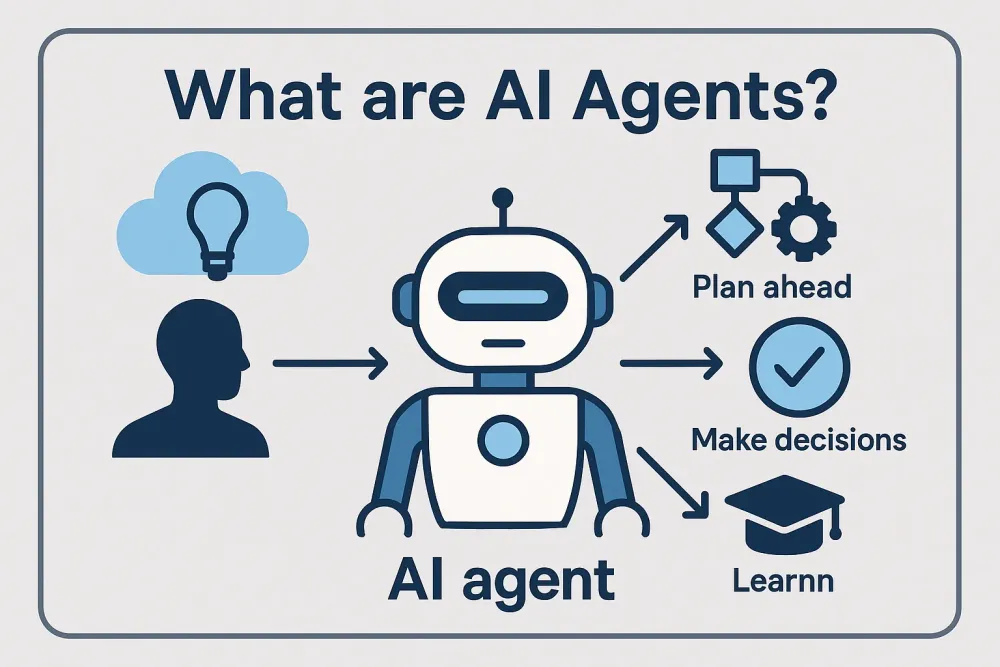
Key Highlights:Manulife is moving beyond experimental AI to integrate autonomous agent-based systems into core financial operations.The shift focuses on 'agentic' AI capable of executing complex, multi-step business workflows without constant human oversight.This transition targets high-impact areas such as insurance underwriting, claims processing, and administrative task automation.The move signals a broader industry trend from passive data analysis to active, operational AI implementation in legacy environments.The Paradigm Shift to Agentic WorkflowsCanadian insurance giant Manulife is leading a significant transformation in the financial sector by transitioning its artificial intelligence strategy from small-scale pilots to deep operational integration. For years, the industry has utilized AI primarily for predictive analytics or basic customer service chatbots; however, Manulife is now deploying 'AI agents'—sophisticated systems designed to take specific actions within a business workflow. This represents a leap from AI as a consultant to AI as a collaborator, capable of navigating internal systems to complete end-to-end tasks.Technically, these agents utilize Large Language Models (LLMs) paired with specialized tools that allow them to interface with Manulife’s existing software infrastructure. By automating the 'middle-office' functions that traditionally required manual data entry and cross-referencing, the firm aims to drastically reduce the time-to-market for new policies and the speed of claim settlements. This operational shift is not merely about cost-cutting but about creating a more responsive, error-free financial ecosystem that can operate at a scale previously impossible for human teams alone.For enterprise leaders, Manulife’s evolution serves as a blueprint for the next phase of digital transformation. The takeaway is clear: the competitive advantage in the next decade will belong to firms that successfully transition their AI from conversational interfaces to action-oriented agents. To replicate this success, organizations must prioritize data accessibility and robust governance frameworks, ensuring that autonomous agents operate within strict regulatory and ethical boundaries while handling sensitive financial data. Finance Hub: Why bank AI strategies fail [interlink(159)], multimodal finance automation [interlink(160)], and UK financial oversight news [interlink(162)].
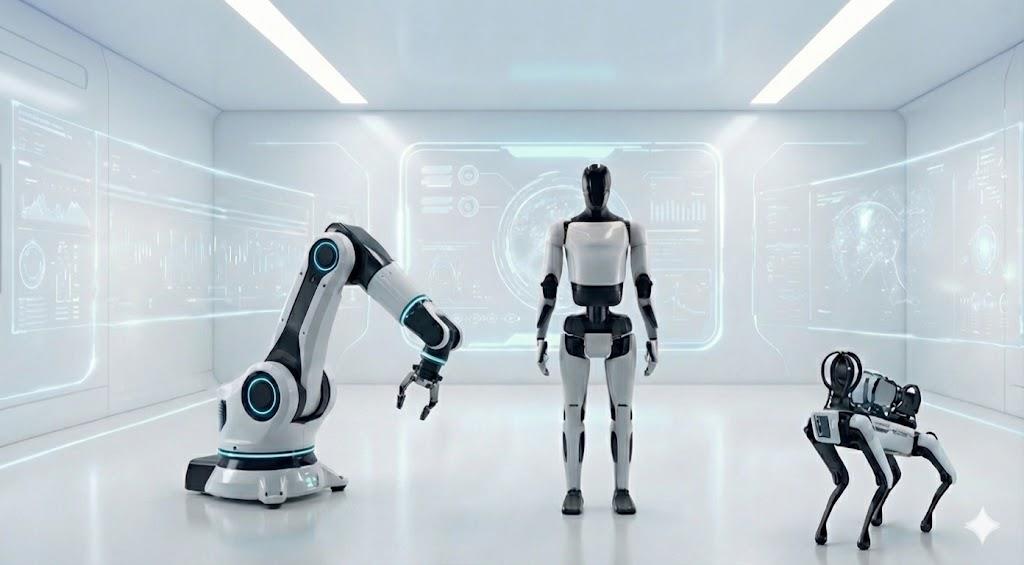
Revolutionizing Industrial Safety: ADLINK and Noble Machines Launch Autonomous AI Robots for Hazardous Environments
Key Highlights:Strategic alliance between ADLINK Technology and Under Control Robotics to develop next-generation autonomous industrial robots.Integration of ADLINK’s rugged edge AI hardware with Noble Machines’ proprietary autonomy software for real-time environmental processing.Targeted deployment in dangerous manufactories and engineering plants where human risk is high.Shift toward general-purpose robotics that can adapt to diverse high-stakes industrial tasks.Next-Gen Autonomy for Industrial SafetyThis landmark collaboration between ADLINK and Under Control Robotics signals a pivotal shift toward truly autonomous industrial environments where safety and efficiency are no longer mutually exclusive.By leveraging ADLINK’s high-performance edge AI platforms, these robots gain the robust local processing power required to navigate and react to unpredictable terrain in real-time, effectively eliminating the latency bottlenecks associated with traditional cloud-based systems.The synergy ensures that hardware is ruggedized enough to withstand extreme conditions while the software remains agile enough to avoid obstacles and human personnel in high-stakes zones.Scalable AI Solutions for Modern FactoriesThe partnership focuses on developing general-purpose robotics, moving away from rigid, single-task machines toward adaptable autonomous systems that can handle various roles.Noble Machines’ software provides the behavioral intelligence necessary for these robots to interact safely with existing factory infrastructure and provide 24/7 monitoring capabilities.This shift to AI-driven robotics allows engineering plants to maintain continuous uptime while significantly lowering the potential for workplace accidents and operational liabilities. Industrial Tech: The robot-as-a-coworker in smart factories [interlink(111)] and physical AI in logistics [interlink(121)].